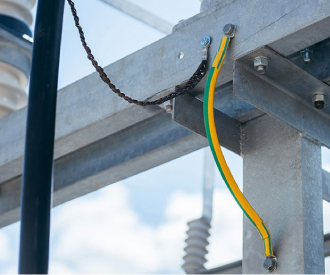

Product Overview: Personal Protective Grounding
Outline
I. Introduction
- Definition of personal protective grounding (PPG)
- Purpose and importance
- Protects workers from electrical shock
- Minimizes risk of arc flash
- Ensures safety on de-energized equipment
- Compliance with OSHA and NFPA 70E
II. Key Components
- Grounding cables (copper or aluminum)
- Grounding clamps and connectors
- Personal protective equipment (PPE)
- Arc-rated gloves and sleeves
- Insulating tools
- Portable grounding systems
III. Applications
- Temporary grounding of high-voltage equipment during switching operations
- Protection against induced voltage from adjacent energized lines
IV. Procedures and Best Practices
- Verify de-energization with properly rated voltage tester
- Apply grounds from equipment back to the source
- Maintain proper grounding sequences (phase-to-phase, phase-to-ground, neutral/earth)
- Inspect grounding equipment before use
- Follow utility safety protocols and NFPA 70E guidelines