
What is Cable Testing?
Cable testing is the process of verifying that electrical, optical, or data transmission cables meet required specifications for performance, safety, and compliance. The purpose is to ensure proper signal transmission, electrical continuity, and insulation integrity throughout the network infrastructure.
Accurate tests using cable testing equipment are critical for achieving reliable network performance. Faulty or underperforming cables can introduce signal loss, interference, or complete network failure. Routine testing provides assurance that every cable within a system can handle the bandwidth, power, and environmental conditions expected during operation.
Cable testing fits naturally within the lifecycle of installation and maintenance services. During installation, it validates proper termination, wiring configuration, and system compatibility. During maintenance, periodic testing detects wear, damage, or degradation over time—helping technicians prevent downtime and ensure long-term reliability.
Types of Cable Tests
Different tests assess specific cable parameters. Selecting the right test type depends on the application, cable construction, and desired performance standard.
Continuity Testing
Continuity testing verifies that each conductor in a cable is electrically connected end-to-end. If the circuit is continuous, current can flow. If not, the circuit is “open”. This testing ensures there are no breaks, open circuits, or reversed connections. It also allows confirmation of proper termination and connector integrity, while assuring the cable meets required electrical performance. Simple continuity checks are the foundation of any cable testing procedure.
Insulation Resistance Testing
This test measures how well the insulation between conductors – and between conductors and ground – resists electrical current flow. High insulation resistance confirms that conductors are properly isolated, reducing leakage current and preventing short circuits. Insulation resistance testing is especially important in power and control cables. It helps detect deterioration, contamination, and water ingress, preventing shock hazards and equipment failure.
Time-Domain Reflectometry (TDR)
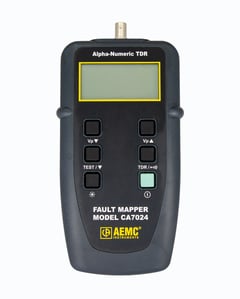
A TDR identifies faults by sending an electrical pulse down the cable and measuring reflected signals. Variations in impedance, caused by faults or discontinuities, generate reflections that reveal the location and nature of the defect. TDRs are widely used for locating opens, shorts, and damaged sections in long cable runs.
Signal Integrity and Crosstalk Measurement
In data communication cables, signal quality is crucial. Signal Integrity and crosstalk measurement are essential aspects of testing these cables – especially twisted-pair cables such as Cat5e, Cat6, Cat6A, Cat7, and Cat8. Signal integrity testing measures attenuation, return loss, and delay skew, while crosstalk tests (NEXT and FEXT) identify unwanted signal coupling between adjacent pairs. These measurements determine whether the cable supports its rated transmission category.
Summary of Test Result Analysis
Interpreting test results requires understanding threshold values set by standards. A cable that fails continuity, exhibits high attenuation, or exceeds crosstalk limits cannot be certified. Proper documentation of results enables repeatable verification and supports quality assurance.
Cable Testing Standards and Compliance
Cable performance is measured against established industry standards that define acceptable parameters and testing methodologies.
Key Standards
- TIA/EIA – Defines structured cabling systems and testing requirements for copper and fiber installations (e.g., TIA-568, TIA-1152).
- ISO/IEC – International standards such as ISO/IEC 11801 provide global guidelines for cabling classes and link performance.
- IEEE – Specifies network protocols and electrical interfaces that cables must support (e.g., IEEE 802.3 for Ethernet).
- ANSI – Ensures consistent measurement procedures and calibration standards for testing equipment.
Global vs. Regional Compliance
While ISO/IEC applies globally, TIA/EIA standards are primarily used in North America. European and Asian regions may reference local variations, but most modern systems are designed for interoperability across all major frameworks.
Importance of Compliance
Adherence to standards guarantees uniform performance, simplifies troubleshooting, and ensures manufacturer warranty eligibility. Compliance testing confirms that cable installations meet both safety and operational benchmarks.
Performance Benchmarks
Testing benchmarks—such as insertion loss, near-end crosstalk (NEXT), and return loss—are directly derived from these standards and vary by cable category or class.
Common Cable Types and Connectors
Different cable types require distinct testing approaches due to variations in material, impedance, and transmission method.
Ethernet Cables
Cat5e, Cat6, Cat6a, and Cat8 cables are the most common for Ethernet networks. Testing involves verifying continuity, mapping, and electrical parameters such as crosstalk and impedance. Cat8 testing also includes higher-frequency validation up to 2000 MHz.
Coaxial Cables
Used in CCTV, broadcast, and RF systems, coaxial cables require tests for signal loss, impedance, and shielding effectiveness. Specialized coax testers and TDRs identify impedance mismatches or connector issues.
Fiber Optic Cables
Fiber testing involves measuring optical loss and reflection using OTDRs (Optical Time-Domain Reflectometers) and optical power meters. These tools assess fiber continuity, connector cleanliness, and splicing quality.
Common Connectors
Connectors such as RJ45 (Ethernet), LC and SC (fiber), and BNC (coaxial) directly affect signal quality and test accuracy. Poor connector installation can lead to increased insertion loss or reflection, making connector compatibility a vital part of testing setup.
Tools and Equipment for Cable Testing
A range of tools exists for different testing scopes, from basic verification to high-end certification.
Handheld Cable Testers
These include verifiers, qualifiers, and certifiers:
- Verifiers confirm wiring configuration and continuity.
- Qualifiers assess network service readiness, such as VoIP or Gigabit Ethernet compatibility.
- Certifiers perform comprehensive tests for compliance with industry standards.
Time-Domain Reflectometers (TDRs)
TDRs provide precise fault location, distance-to-break analysis, and impedance profiling for both copper and coax cables.
Insulation Resistance Testers

Used primarily in power and control systems, these testers verify insulation integrity between conductors to prevent current leakage.
Tone Generators and Probes
Tone generators apply a traceable signal to a cable, and a probe detects it—useful for identifying cable paths or tracing faults in complex wiring environments.
Selecting the Right Tool
When choosing a tester, key considerations include accuracy, compatibility, ease of use, and cost. Higher-end certifiers offer advanced diagnostics and reporting but require greater investment.
Network Cable Certification vs. Qualification
Cable testing can serve different purposes depending on the phase of network deployment.
Certification Testing
Certification validates that cables meet defined performance standards (e.g., Cat6 or Cat6a). It’s performed during initial installation and is often required for manufacturer warranties. Certified results include detailed measurements such as attenuation, NEXT, and delay skew.
Qualification Testing
Qualification determines whether existing cabling can support specific applications—such as Gigabit Ethernet or PoE (Power over Ethernet). It’s typically used during network upgrades or troubleshooting to assess service compatibility without full certification.
Choosing between the two depends on whether you’re establishing a new network (certification) or maintaining an existing one (qualification).
Fault Detection and Troubleshooting Techniques
Fault detection identifies and resolves issues that degrade performance or interrupt connectivity.
Common Faults
- Open Circuits: A conductor is broken or disconnected.
- Short Circuits: Two conductors make unintended contact.
- Impedance Mismatches: Caused by inconsistent cable geometry or incorrect connectors, leading to reflections and signal loss.
Locating Issues
TDRs and advanced testers measure the time and distance to faults, pinpointing problem areas.
Interpreting Test Results
Understanding key parameters—such as excessive attenuation or crosstalk—helps isolate whether a fault is physical or environmental.
Real-World Example
A common scenario involves degraded network speed traced to a split pair in a Cat6 cable. Testing reveals abnormal crosstalk readings, allowing technicians to re-terminate the connector and restore performance.
Best Practices for Cable Installation and Testing
Successful installations rely on preventive measures and structured testing procedures.
- Pre-Installation Planning: Define routes, termination points, and compliance standards before deployment.
- Labeling and Documentation: Mark cables and record test results for traceability and maintenance.
- Proper Routing: Avoid high-interference zones, minimize sharp bends, and maintain proper separation from power lines.
- Post-Installation Certification: Conduct full certification to confirm compliance with required categories.
- Regular Testing and Maintenance: Establish periodic testing schedules to identify degradation or damage.
Following these practices ensures that cable infrastructure remains reliable and easy to maintain over time.
Impact of Cable Testing on Network Performance
Thorough testing directly impacts overall network performance metrics such as bandwidth, latency, and error rate.
- Bandwidth Assurance: Proper testing ensures that the cable supports its rated data throughput.
- Low Latency: Minimizing impedance and crosstalk ensures faster, more stable data transfer.
- Thermal and EMI Considerations: Testing verifies installation quality in environments prone to temperature variation or electromagnetic interference.
Case Example: A facility upgrading from Cat5e to Cat6a performed certification testing and documented a 40% reduction in latency and a measurable improvement in signal-to-noise ratio after replacing substandard cables.
Automated Cable Testing Solutions
Automation improves efficiency, accuracy, and consistency in testing procedures.
- Speed and Repeatability: Automated testers perform standardized tests rapidly and eliminate user error.
- Integrated Software: Systems can log, analyze, and export test results for certification documentation.
- Remote Capabilities: Modern testers allow technicians to conduct and monitor tests from remote locations.
- Data Analytics: Historical data supports trend analysis, preventive maintenance, and SLA compliance reporting.
Automation is particularly valuable in large-scale installations or service environments where consistent performance verification is critical.
Safety Considerations in Cable Testing
Cable testing involves electrical exposure and must follow safety best practices.
- Equipment Safety: Use insulated tools, maintain grounding, and verify tester calibration before use.
- Testing in Live Environments: Be aware of voltage presence when testing PoE or power cables.
- Safety Codes: Follow OSHA, NFPA 70E, and local electrical safety guidelines.
- Technician Training: Personnel should complete certification courses for safe handling of electrical and fiber optic systems.
Ensuring technician safety prevents injury, equipment damage, and inaccurate test results.
Conclusion
Cable testing is a cornerstone of reliable communication infrastructure. Understanding testing types, standards, and proper tools ensures that each installation performs as intended and remains compliant with industry benchmarks.
Integrating testing throughout the full cable lifecycle—from installation to maintenance—reduces downtime, improves performance, and maintains certification integrity.
JM Test Systems provides a full range of certified cable testing instruments and calibration services, ensuring your tools meet the highest accuracy standards for every application.
